1. Natural (Heirloom or Open-Pollinated) Seeds
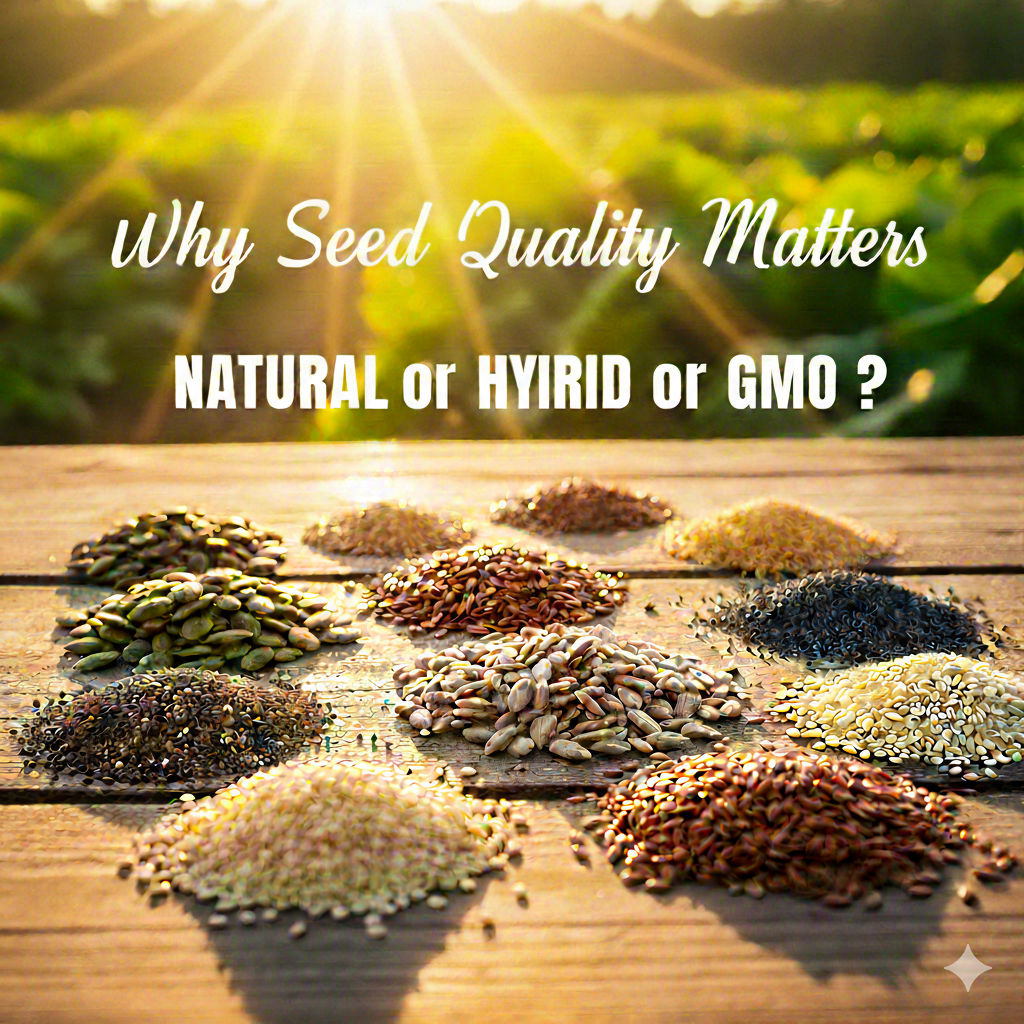
What Are Natural Seeds?
What Are Natural Seeds?
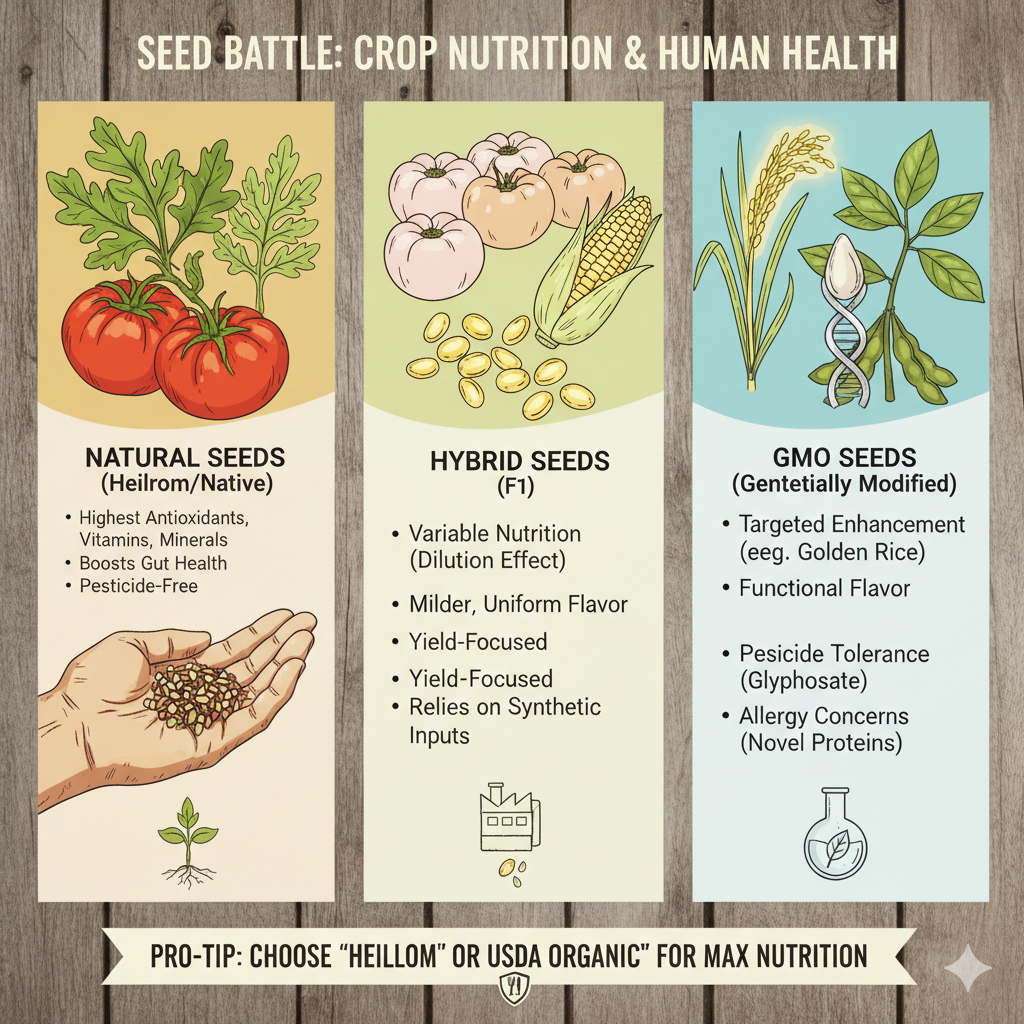
Natural seeds come from plants that reproduce through natural pollination—by wind, insects, birds, or self-pollination—without human genetic intervention. These seeds have been used for thousands of years and are often referred to as heirloom or traditional seeds.
Key Characteristics
- Seeds can be saved and replanted year after year
- High genetic diversity
- Adapt well to local soil and climate
- Typically grown in Organic or Natural farming systems
Impact on Human Health
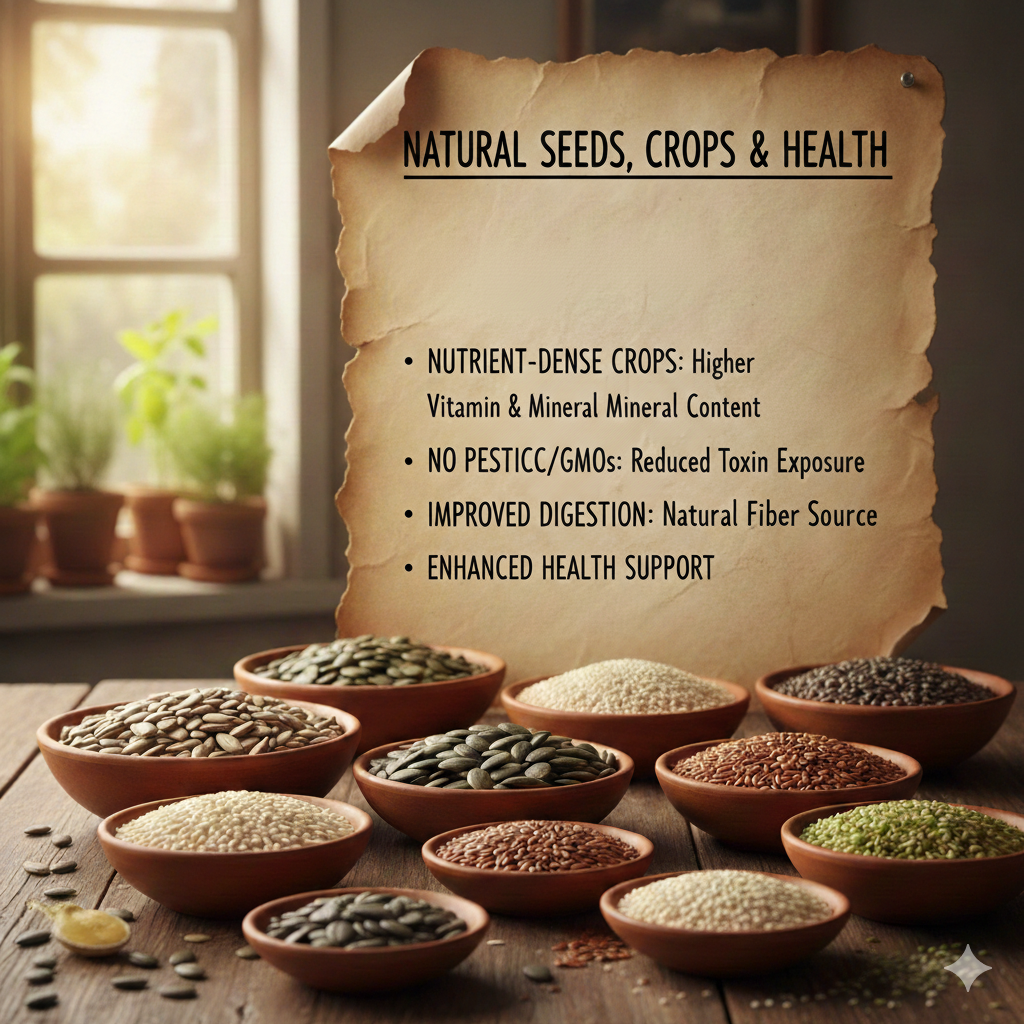
Natural crops are widely considered the safest and most nutritious option:
- Often contain higher levels of antioxidants and micronutrients
- Lower exposure to chemical pesticides and herbicides
- Reduced risk of allergenic or unexpected genetic changes
Because these crops are closer to their original biological form, many nutritionists believe they support better gut health and long-term wellness.
- Hybrid Seeds
What Are Hybrid Seeds?
Hybrid seeds are produced by cross-pollinating two different but compatible plant varieties to combine desirable traits such as higher yield, uniform size, or disease resistance. This process is entirely natural and does not involve genetic engineering at the DNA level.
Key Characteristics
- Higher productivity than natural seeds
- More uniform appearance and growth
- Seeds from hybrid crops usually cannot be reused reliably
- Common in commercial farming
Impact on Human Health
Hybrid crops are generally safe to consume:
- No direct evidence links hybrid foods to health risks
- Nutritional value is often similar to natural crops
- However, hybrids are frequently grown with chemical fertilizers and pesticides
The health impact depends more on farming practices than the hybridization itself. Excessive chemical use may leave residues that can affect
- GMO (Genetically Modified Organism) Seeds
What Are GMO Seeds?
GMO seeds are created by altering the genetic material of a plant in a laboratory. Genes from other plants, bacteria, or even animals may be inserted to achieve traits like pest resistance, herbicide tolerance, or longer shelf life.
Key Characteristics
- Genes are modified at the DNA level
- Designed for large-scale industrial farming
- Often patented and controlled by corporations
- Cannot be replanted legally or effectively
Impact on Human Health
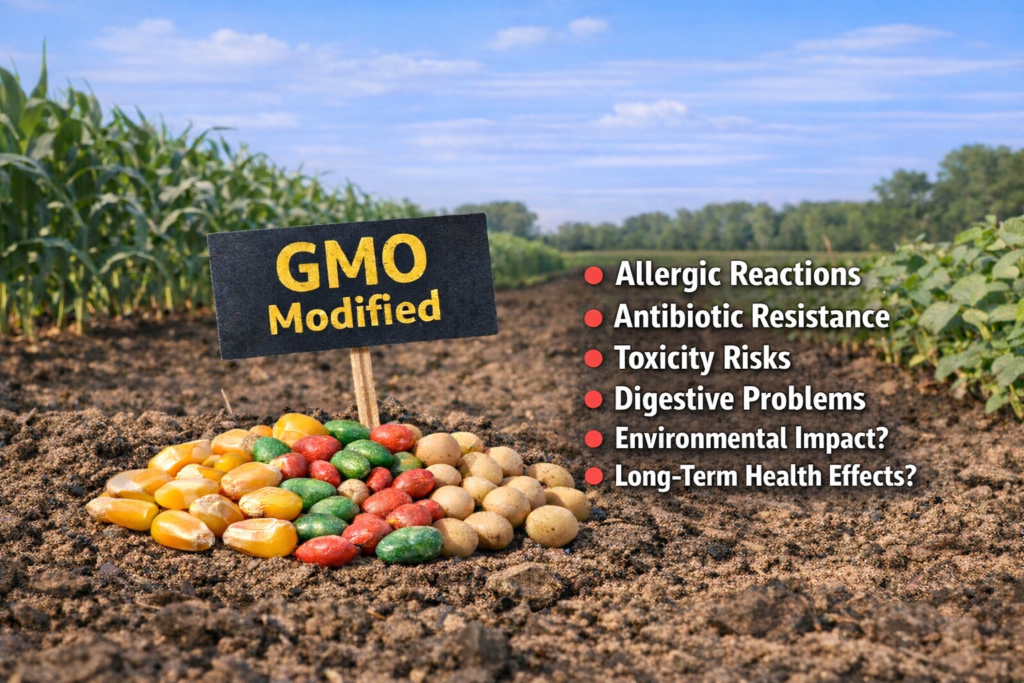
The health effects of GMOs remain a subject of ongoing debate:
- Regulatory agencies state approved GMOs are safe for consumption
- Long-term health effects are still being studied
- Some concerns include:
- Increased exposure to herbicides such as glyphosate
- Potential allergenic reactions
- Possible effects on gut microbiota
While conclusive evidence of harm is limited, critics argue that insufficient long-term studies exist, especially regarding chronic consumption.
Comparison at a Glance
Feature | Natural Seeds | Hybrid Seeds | GMO Seeds |
Method | Natural pollination | Controlled cross-pollination | Genetic engineering |
Genetic modification | No | No | Yes |
Seed saving | Yes | No | No |
Yield | Moderate | High | Very high |
Chemical dependency | Low | Medium | High |
Health concerns | Minimal | Low (chemical-related) | Debated |
Environmental and Indirect Health Effects
Human health is closely tied to environmental health. GMO and hybrid crops often promote monoculture farming, which can:
- Reduce soil fertility
- Decrease biodiversity
- Increase chemical runoff into water sources
Natural farming systems, on the other hand, support ecological balance, which indirectly benefits human health through cleaner water, healthier soil, and more nutritious food.
Conclusion
Each type of seed has its place in modern agriculture:
- Natural seeds prioritize health, sustainability, and biodiversity
- Hybrid seeds focus on productivity and food availability
- GMO seeds aim to solve large-scale agricultural challenges but raise ethical, environmental, and health questions
For consumers, the healthiest choice often lies in how food is grown, not just the seed type. Choosing locally grown, minimally processed, and chemical-free foods—regardless of whether they are natural or hybrid—can significantly improve long-term health.
As awareness grows, balancing agricultural innovation with human and environmental well-being becomes more important than ever.